
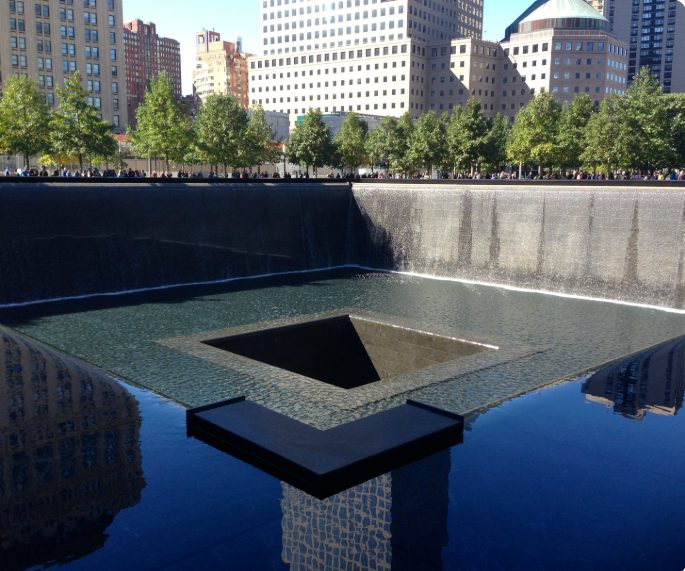
Leadership Lessons That Still Fly, 25 Years Later
Fifteen months into the job, with no plan and no script, she stood on a chair in six hotel lobbies and told hundreds of strangers the truth. What that day taught her still runs every strategy she builds.
·
Strategist, CSIG
·
September 11, 2026 update
Twenty-five years ago this week, the U.S. aviation system did something it had never done before: it stopped. Every plane in American airspace was ordered to land — immediately, wherever it was. At Delta, that meant flights already over the Atlantic had nowhere to go but north. Aircraft bound for Atlanta, New York, and Los Angeles put down instead in places like Gander and St. John’s, Newfoundland — small airports that had never seen anything like the wave of wide-body jets now sitting on their tarmacs, full of passengers who had boarded in one world and landed in another.
I was fifteen months into my job as Director–InFlight Customer Satisfaction at Delta, and one of only four InFlight Directors on-site that morning. Most of our leadership team was stranded on the East Coast when the system shut down around them.
We needed to reach flight attendants scattered across six hotels, and pagers — our main way of sharing information back then — had gone down with everything else. So I took the helm the only way left: standing on a chair, addressing hundreds of people at a time, across 29 hours. Most of them were people I’d never met.
“I’m Cheryl Scales, Director–InFlight Customer Satisfaction, part of the Executive InFlight Leadership Team, to let you know: We see you. We are working through a plan. Stay steady. We will be back in a few hours with a way forward, or the details that we know.”
Said six times, across six hotels, over 29 hours
Somewhere in that window, I slept on the floor of my office for an hour. What I learned in the hours and years that followed has outlasted every strategy deck I’ve built since.
Five Lessons
Lead before you have the full picture.
I didn’t have a plan to give those flight attendants. I had a promise. Nobody in an operations center that morning had complete information — captains were telling passengers what they knew, when they knew it, because staying silent was worse than being incomplete. When the systems you rely on stop working, waiting for certainty is the wrong instinct. Say what’s true right now, and come back when you know more. Crisis leadership isn’t waiting until you feel ready to speak; it’s communicating honestly in five-minute increments while the picture assembles itself around you.
The decision made in a minute can carry a company for a decade.
Grounding a fleet, diverting hundreds of aircraft, holding passengers in small-town airports for days — none of these were choices anyone had time to model or workshop. They were made in real time, under total uncertainty, by people trusting their training and each other. I wasn’t the most senior person at Delta that morning. But when a room needed someone to hold it steady, seniority wasn’t the qualification that mattered — willingness was. Most leaders will never face a decision with those exact stakes. But the lesson scales down: the plan you build under pressure this quarter is often the one your organization stands on for years. Build for that weight, even in ordinary decisions.
Systems fail. People don’t have to.
The infrastructure that day — air traffic control, airline scheduling, communication networks — was overwhelmed almost instantly. Ours failed literally: the pagers we depended on to reach flight attendants across six hotels simply stopped working. What held instead was a person standing on a chair, saying the same true thing six times a day for 29 hours until people could hear it. Strategy is the system you build. Culture is what holds when the system can’t. You need both — but only one of them shows up when the other breaks.
Stewardship means carrying the cost, not just the mission.
Delta was the first airline to fly again after 9/11, and rebuilding public trust wasn’t a marketing task — it was a human one. I championed a Brand Ambassador program that put 1,000 flight attendants directly in front of corporate clients to help rebuild the confidence to fly again. It worked because it wasn’t Delta telling people it was safe — it was the people who had lived through that day, saying so themselves. That October, CEO Leo Mullin hosted a rally in our Atlanta hangar for nearly 5,000 employees, and my SVP chose me to help fire our people up and believe again. Just before I took the stage, my ankle gave out. My team wrapped it right there so I could still walk out and deliver. I wasn’t going to let our people down. Real leadership isn’t just the decisive moment in the crisis — it’s staying accountable for what the crisis costs, including what it costs you personally, long after the headlines move on.
The quietest leadership is the one no one photographs.
There’s no iconic image of the person who helped keep a command center calm for eighteen straight hours, or the leader who made forty phone calls to reunite crew members with their families. That kind of leadership rarely gets remembered publicly — but it’s the kind that actually holds an organization together. I’ve never really talked about this anniversary before. This year feels different. Maybe that’s the hardest lesson of all: the same courage it takes to steady strangers on the worst day in your industry’s history is the courage it takes, years later, to say — this happened, and I was there.
Why This Still Matters in 2026
Every leader I work with today — in a boardroom, a campaign, or a congregation — is being asked to lead through some version of the same conditions: incomplete information, systems under strain, people watching to see if they’ll be told the truth. September 11 didn’t invent crisis leadership. It just made the cost of getting it wrong impossible to ignore.
Twenty-five years later, I’m not standing on a chair in a hotel lobby. I’m in boardrooms, on calls, and at kitchen tables with leaders and businesses — strategizing and coaching what it actually takes to hold steady, and how to get there before the crisis forces the lesson on you.
The chair changes. The discipline doesn’t.
This Year, We Showed Up Again
This year, that instinct to show up brought me back to Delta’s people on 9/11 Day — the national day of service and remembrance the anniversary has grown into. I joined 1,500 fellow Delta people at the College Football Hall of Fame in Atlanta, alongside AmeriCorps, Citi, American Express, JPMorganChase, The Home Depot, and dozens of other major companies and organizations that showed up that morning.
Together, in Atlanta alone, we packed more than 850,000 Apple Oatmeal bags into food boxes bound for families who need them. My shift alone — across every company on the floor — packed 185,000 of those bags.
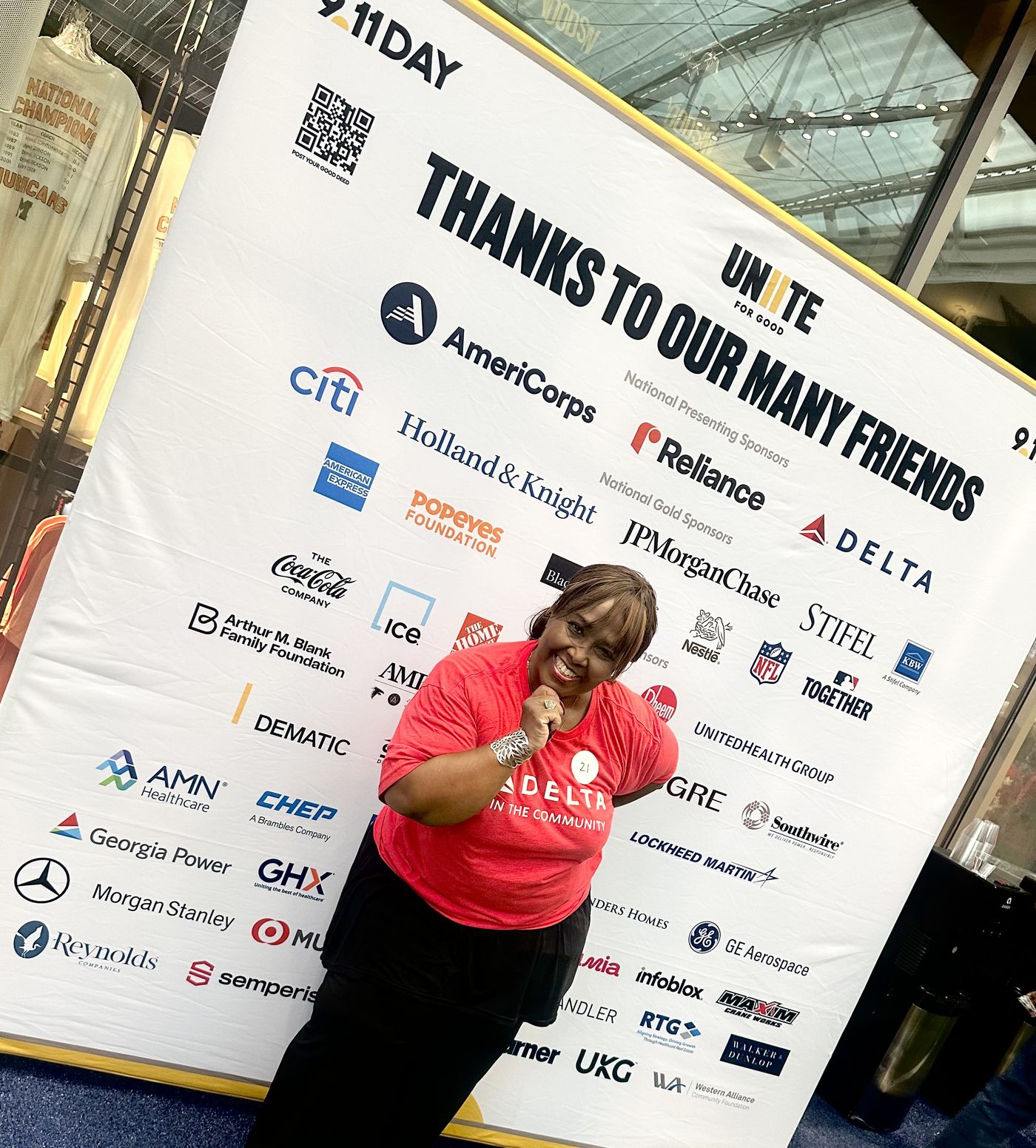
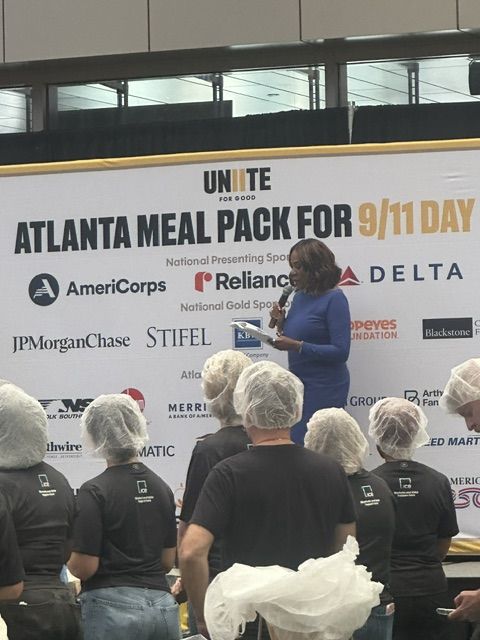
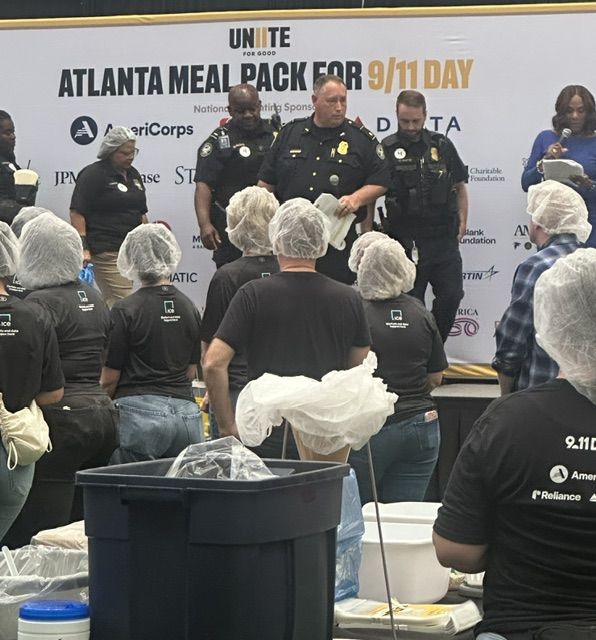
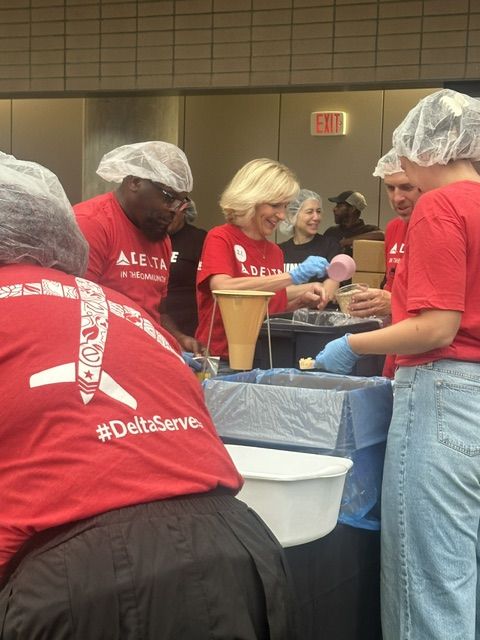
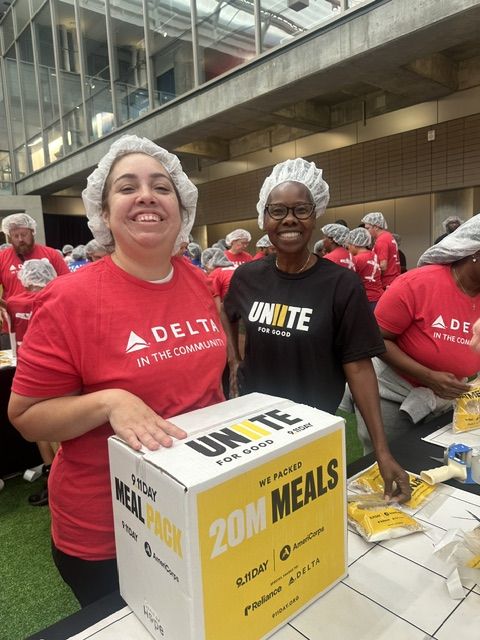
Different room, same instinct: show up, do the work in front of you, and let the people beside you see that you did. That’s the whole of it. That’s the lesson that hasn’t changed in twenty-five years.
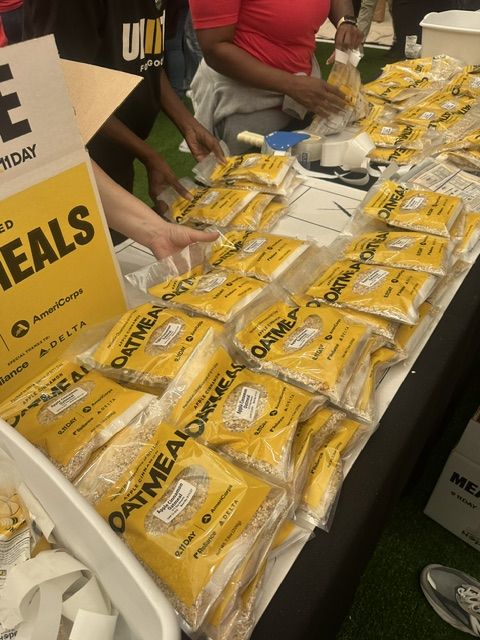
Different room, same instinct: show up, do the work in front of you, and let the people beside you see that you did. That’s the whole of it. That’s the lesson that hasn’t changed in twenty-five years.
Ready to see where the leverage is in your situation?
30 minutes. No pitch — just a conversation about fit.